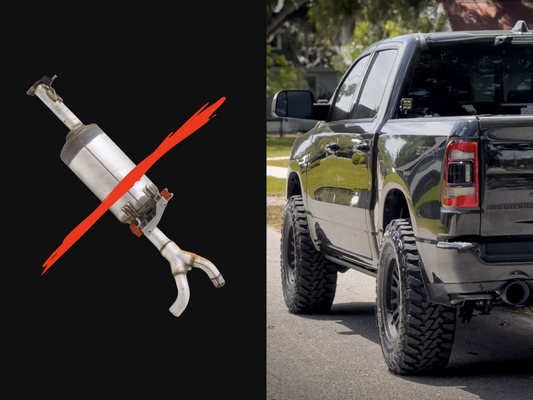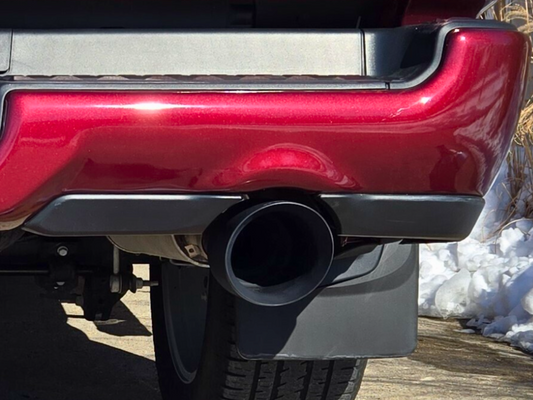


A cat-back exhaust is the section of your exhaust system that runs from the catalytic converter to the rear tips. It replaces the mid-pipe, muffler, and tips with wider mandrel-bent tubing to improve flow, sound, and a few horsepower. On many trucks you can get the same result by swapping just the muffler and resonators.

Why "Cat-Back"?
The catalytic converter serves as the natural boundary for two straightforward reasons:
- EPA Rules: The beauty of cat-back systems lies in their location - everything after the catalytic converter is generally fair game for modification in most jurisdictions. Since you're not messing with the emissions-controlling catalytic converter, you can modify all you want while keeping the EPA happy.
- Convenience: Most cat-back systems are designed to bolt right up to existing connection points just after the catalytic converter. Whether it's a flange or slip-fit connection, manufacturers have made it relatively straightforward for both professional shops and weekend warriors to install these systems.
What Does a Cat-Back Exhaust System Do?
Let's be real - your factory exhaust system gets the job done, but it probably doesn’t sound very good, and factory mufflers are notoriously restrictive so you are leaving some MPG’s and horsepower on the table. You can expect a couple of key improvements by replacing the system.
- Performance Gains: By reducing back pressure and improving exhaust flow, a cat-back system can unlock a bit more horsepower and torque. Most aftermarket mufflers are also more efficient so you should see slight mileage improvement.
- Sound Enhancement: One of the main reasons people opt for a cat-back system is to amplify their vehicle’s voice. Whether you’re after a low, throaty growl or a “wake up the neighbors” system, there’s a system out there for you.
- Aesthetic Appeal: Let’s not forget the visual upgrade. The exhaust tips on aftermarket systems are usually much better looking than the factory tips.
Should You Replace Your Cats?
Now, you might be wondering: "Why not just replace the catalytic converter with a high-flow version?" Well, in 2025, it's rarely worth the hassle. Modern catalytic converters are remarkably efficient, and the minimal gains from replacing them often don't justify the cost or potential legal issues.
There are really only two scenarios where you might need to replace your cats:
1. The "Midnight Auto Parts Removal Program" struck your vehicle (yes, catalytic converter theft is still a thing - those precious metals aren't getting any less precious)
2. You're building a dedicated track car and are chasing every last horsepower

Installation Tips
While cat-back systems are designed for relatively easy installation, here are some pro tips:
- Use penetrating oil on old bolts several days before installation
- Have a cutting tool handy in case the old exhaust is stubborn
- Most modern gaskets are reusable, but it may be easier to replace the hardware
- Having a helper during installation can make alignment much easier
The Bottom Line
A cat-back exhaust system is one of the most popular aftermarket modifications because it offers a great balance of sound, performance, and legality. While it won't transform your vehicle into a supercar, it will give it a voice of its own and might just put a smile on your face every time you start the engine.
At B2 Fabrication, we've seen our fair share of exhaust systems , and we're always happy to help customers find the perfect balance of performance and sound for their specific needs. Whether you're looking to add a little rumble to your ride or seeking maximum performance within legal limits, a cat-back system might be just what you're looking for.
Speaking of cat-backs, we have a bunch available that are engineered to sound great!
Frequently Asked Questions
Is a cat-back exhaust worth it?
For most truck owners, yes — if the goal is a deeper sound and a more aggressive look. A cat-back opens up the tone and adds a modest amount of power, but the real payoff is how the truck sounds and looks, not raw performance numbers. If you mainly want the sound, you can often get most of that result by just swapping the muffler and deleting the resonators for a few hundred dollars less than a full cat-back.
Does a cat-back exhaust add horsepower?
A little — usually around 5 to 25 horsepower on a naturally aspirated V8, mostly in the higher RPM range where the engine breathes hardest. The gains come from smoother, less restrictive airflow behind the catalytic converters. On a turbocharged or supercharged engine the difference is bigger. On its own, a cat-back is really a sound-and-flow upgrade, not a major power adder. Cold air intakes compliment aftermarket exhaust systems and will usually add considerably more horsepower as a combination.
What's the difference between a cat-back and an axle-back exhaust?
A cat-back replaces everything from the catalytic converter back — the mid-pipe, resonator, muffler, and tips. An axle-back only replaces the section from the rear axle back, which is basically the resonators and optionally tips. Axle-back is cheaper and faster to install but changes the sound less, while a cat-back swaps more of the system for a bigger difference in tone and flow.
How much does a cat-back exhaust cost?
Most cat-back systems run between $600 and $1,800 depending on brand, material, and vehicle, with premium names like Borla, MagnaFlow, and Corsa sitting at the top of that range. Because your truck might already leave the factory with quality mandrel-bent stainless tubing, you can often reach the same sound by replacing just the muffler and resonators for a fraction of a full cat-back price.
Will a cat-back exhaust be too loud or cause drone?
It depends on the muffler and whether the resonators are removed. A quality cat-back tuned for a deep tone stays civil at cruising speed, but straight-pipe or resonator-delete setups can create "drone" — a low droning hum at highway RPM. Choosing the right muffler and keeping a resonator is how you get an aggressive sound without the drone on long drives.